
Exhibitions at Photo London 2026
In the previous article about the Photo London 2026 photography fair, I shared my general impressions of what it is like to attend a business event. Now, I would like to highlight some of the works on display that I enjoyed the most. As I mentioned in the earlier piece, most galleries dedicated their exhibitions to editorial projects and intimate photographic essays featuring street portraits or scenes from everyday family life, subjects that tend to hold my attention less than landscapes and photojournalism.
First and foremost, I enjoyed attending the event because it gave me the opportunity to engage with the global elite of photographic themes that I am naturally less inclined to explore. Since I do not usually spend much time following contemporary conceptual photography, seeing which artists galleries are investing in, and which projects or individual works they are promoting, is valuable for research and study. It helps me discover new approaches, or simply appreciate work that lies outside my usual field of interest.
However, as I also mentioned in the previous article, what I enjoyed most was seeing on the walls works and artists that I already knew, but had previously encountered only through digital media. Right after entering the fair, the London gallery Iconic Images displayed a series of photographs depicting historic moments and famous personalities. Even from a distance, amid that wall crowded with framed works, I immediately spotted a whale that I knew had been photographed by Paul Nicklen. That image drew me in, and on the opposite side of the same wall was edition three of six of Woman with Goose, photographed by Cristina Mittermeier in China in 2008.
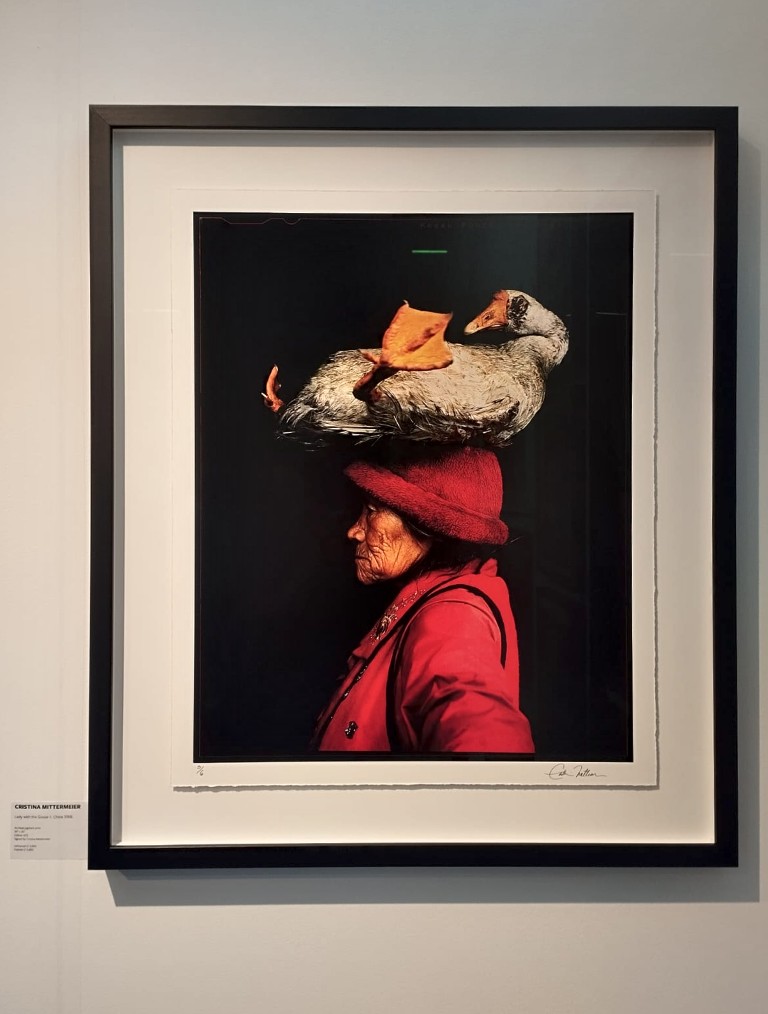
Woman and the Goose – Cristina Mittermeier, 2008.
Continuing my somewhat erratic route through the fair, most of the landscape and nature photography I encountered consisted of details of temperate forests rendered in a way that mimicked Impressionist paintings from the early twentieth century. This is a trend I often see in photography competitions, perhaps explained by the place this technique has found in the art market through its pursuit of atmosphere and fresh air.
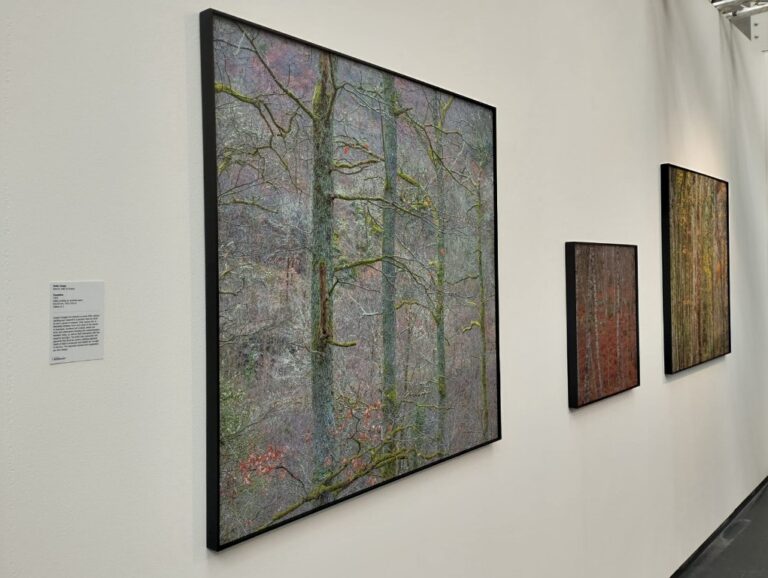
Photographs by Didier Goupy
Another trend that appeared repeatedly across numerous galleries was landscape photography in the style of Michael Kenna. High contrast black and white long exposures in a square format are the hallmark of Kenna’s distinguished and long standing body of work. He has inspired an entire generation of artists, some of whom I follow and greatly admire, alongside Kenna himself. Represented at the fair by The Photographer’s Gallery, it was a pleasant surprise to encounter a wall displaying works from different periods of his career.
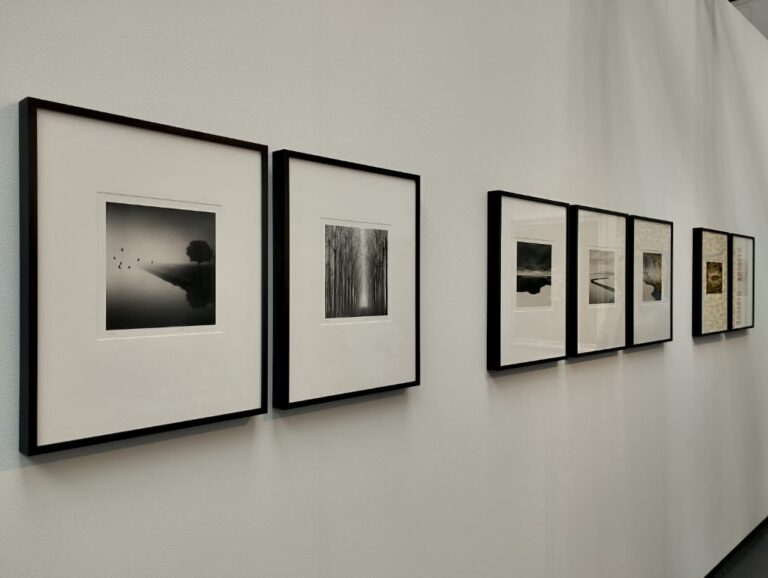
Photographs by Mchael Kenna
Still within the realm of celebrated black and white photography, the Icelandic gallery Qerndu presented several works by fellow Icelander Ragnar Axelsson, whom I consider one of the greatest visual documentarians of the Arctic. I fell in love with his work at first sight when I discovered it in Reykjavík in 2023, and I never tire of seeing it.
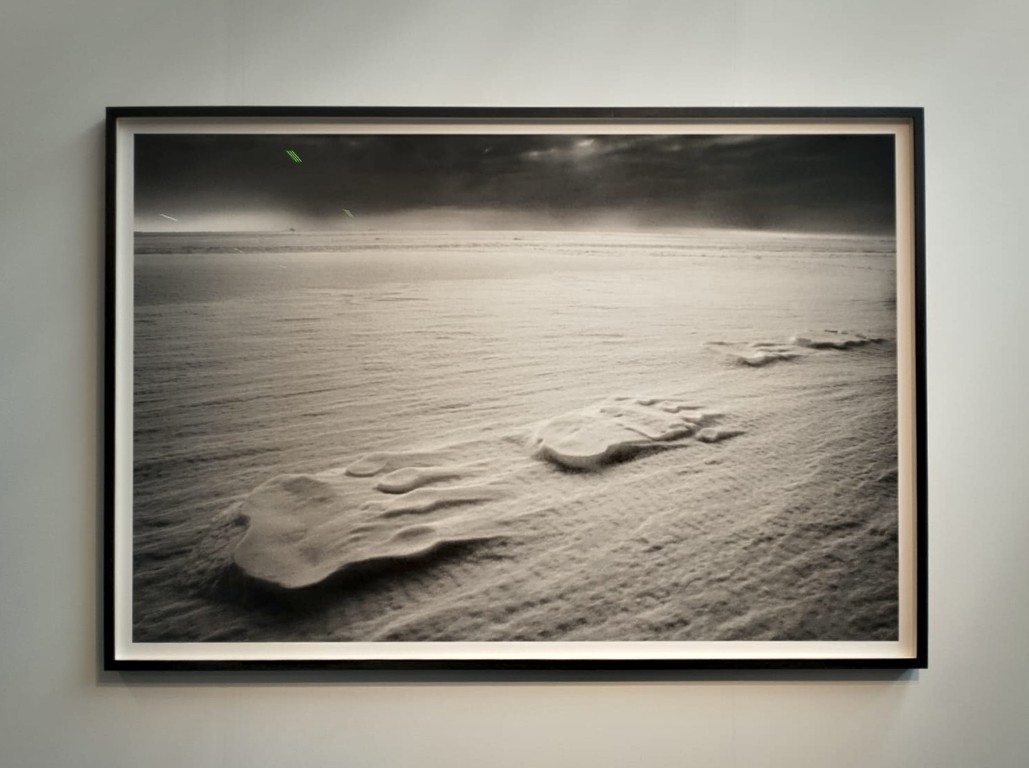
Polar bear tracks on the sea ice – Ragnar Axelson, 2017.
Yet it was not Axelsson’s photographs at Qerndu that occupied most of my time at the fair. My greatest surprise came from the gallery Salto Ulbeek, which, in partnership with the Royal Geographical Society of the United Kingdom, exhibited for the first time platinum palladium prints made from negatives taken during the earliest Antarctic expeditions. Through the exhibition Antarctica Furthest South, the gallery placed side by side the second expedition to reach the South Pole, only five weeks after the first, led by Robert Scott and photographed by Herbert Ponting, and the tragic story of the wreck of the Endurance in the Weddell Sea during Ernest Shackleton’s expedition, photographed by Frank Hurley. Books containing all the recovered photographs from both expeditions were also on display, and I hope one day to add them to my small but carefully curated library.
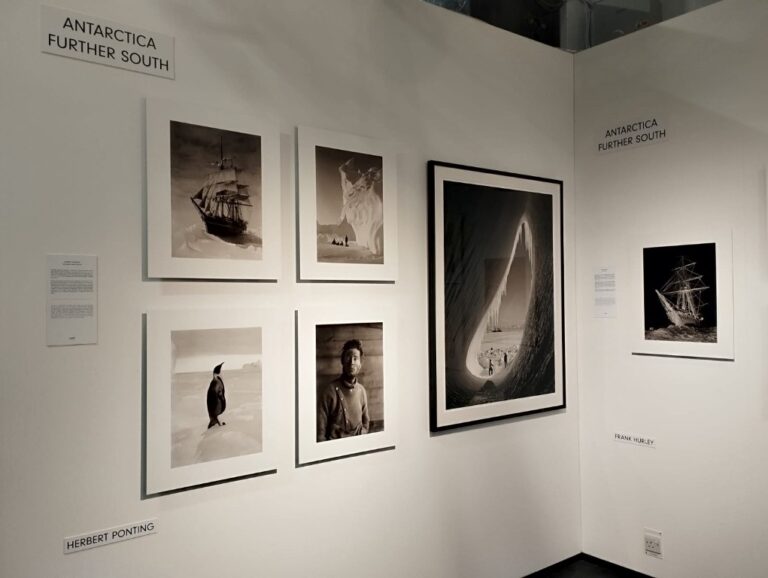
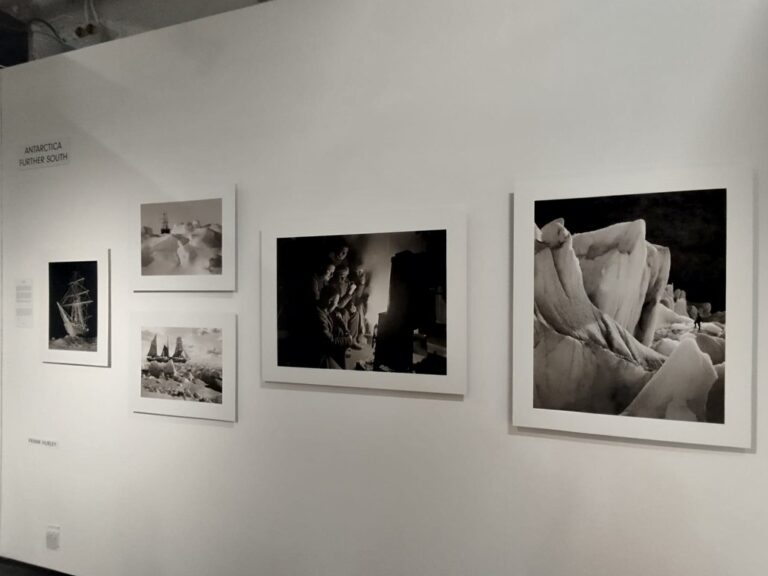
Antartica further south exhibition featuring Herbert Pointing and Frank Hurley at Salto Ulbeek gallery.
These expeditions, along with Amundsen’s, the first to reach the geographic South Pole, carry remarkable stories worthy of a brief mention. Scott died on the return journey from the South Pole to base camp while carrying the first fossils ever discovered in Antarctica. Shackleton’s expedition, meanwhile, could easily have gone down in history as a complete disaster, yet through extraordinary discipline and determination, every member of the crew was rescued alive nearly two years after the Endurance sank. Alfred Lansing’s book Endurance: Shackleton’s Incredible Voyage left a deep impression on me because of the crew’s ability to survive on the ice. To this day, I feel slightly embarrassed whenever I complain about being cold because I still think about what Shackleton’s team endured during those two years in Antarctica.
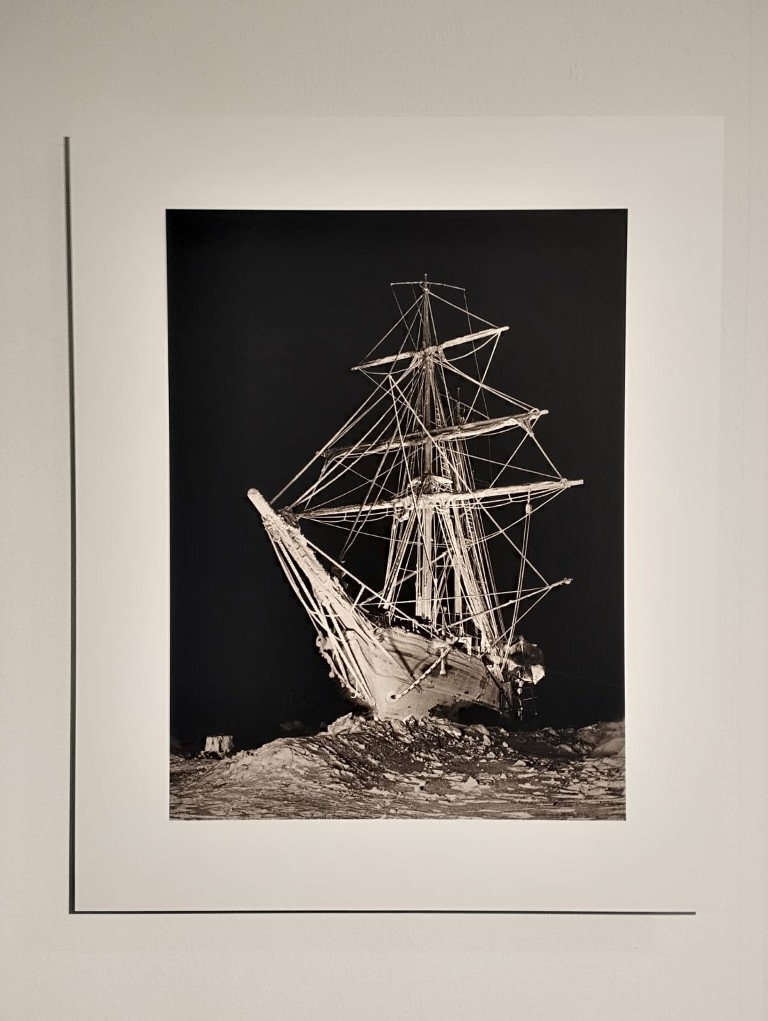
Endurance by Frank Hurley, 1915
Discoveries
So far, I have discussed artists and works that were already familiar to me, but I would also like to highlight two discoveries that particularly caught my attention at the fair. I selected works by the Argentine artist Claudia Leonelli and the Australian photographer Edward Burtynsky because both employ an aerial perspective to depict landscapes undergoing transformation while emphasizing striking forms and textures. Claudia Leonelli’s bird’s eye perspective focuses on the natural evolution of Argentina’s coastal landscapes, where the ocean continuously reshapes beaches and estuaries.
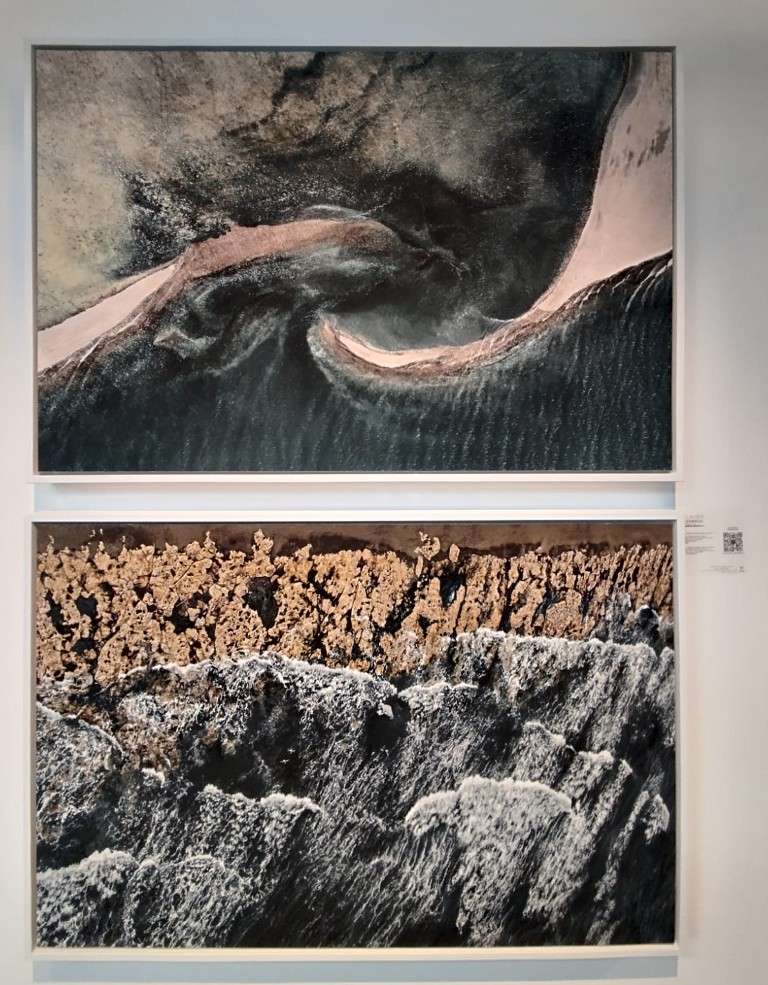
Photographs by Claudia Leonelli
Finally, Burtynsky’s work portrays locations affected by mining activity. As one of the first galleries visitors encounter after entering the fair, his photographs immediately command attention because of their scale and, above all, their texture. The photographic and printing techniques give the works extraordinary depth, creating a sense of three dimensionality when viewed from a distance. The result is an immediate and unique visual impact unlike anything else at the fair.
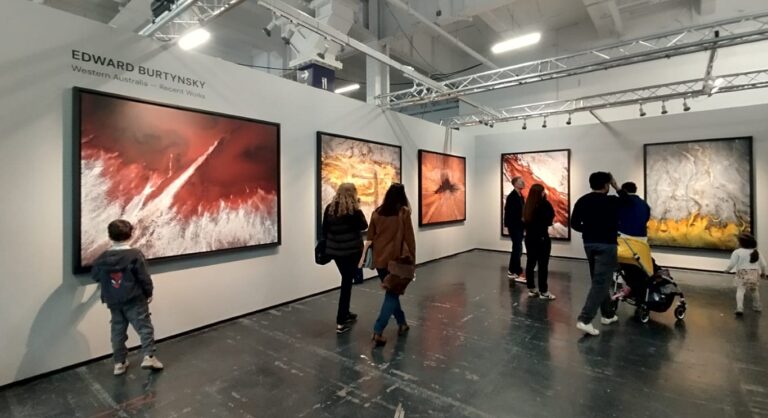
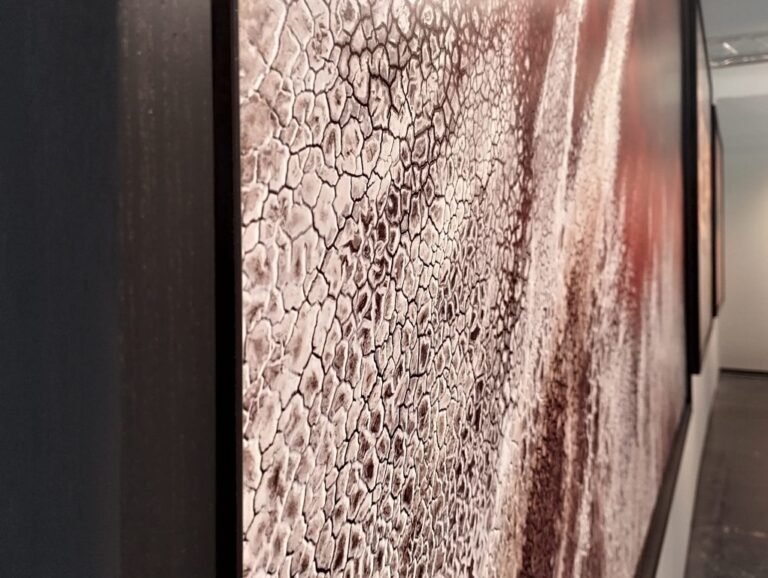
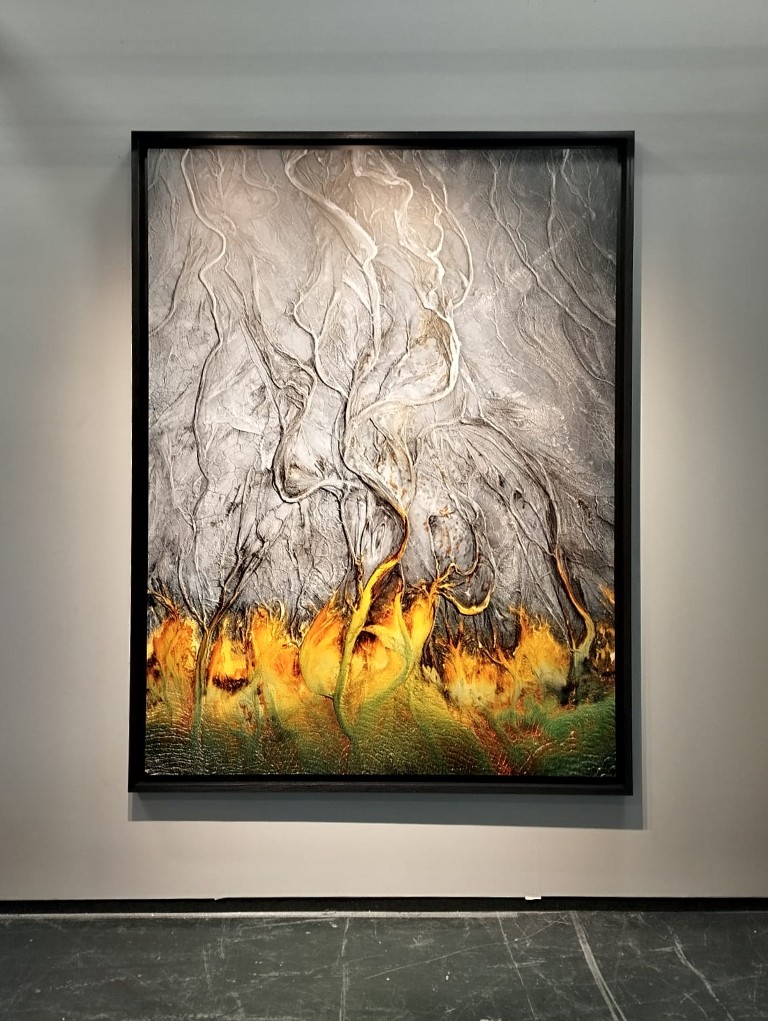
Photographs by Edward Burtynsky