
Exhibition “Paiter Suruí, True People”, by the Lakapoy Collective
Proximity to major urban centres also means greater opportunities to access cultural activities in general, but especially concerts, museums and galleries. While this kind of access to culture is unfortunately concentrated in only a few hubs, each visit has to be made the most of. During an unexpected stopover in São Paulo, I took advantage of the trip to visit three photographic exhibitions, even though, at first, my main interest was the Wildlife Photographer of the Year exhibition, which I wrote about in October. But before going to the Catavento Museum, I made a quick stop at the Instituto Moreira Salles, which was hosting two exhibitions that surprised me very positively and were well worth the visit in their own right.
The first, by Gordon Parks, features photographs from the 1940s to the 1970s dealing with apartheid, racism, and the life and struggle of Black people in the United States. This exhibition runs until 1 March 2026, so I will still have time to write about it with the calm and attention that both the exhibition and the subject deserve.
The second, which surprised me the most in every respect, was called Paiter Suruí, True People. The exhibition brings together more than 800 photographs taken by the Lakapoy Collective, a collective of Paiter Indigenous people who use photography as a weapon of resistance.
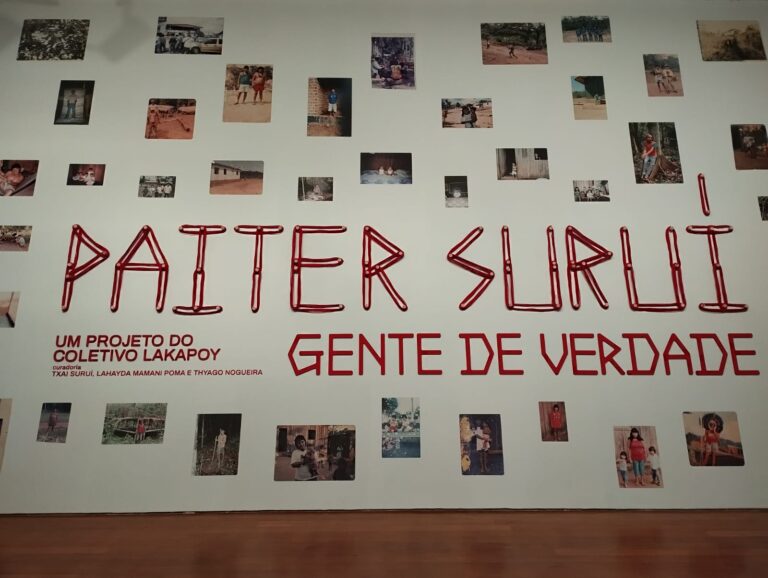
Until the 1960s, the Paiter people lived in the centre of what is now the state of Mato Grosso. However, the expansion of agribusiness and the opening of roads for the colonisation of the southern edge of the Amazon during the civil–military dictatorship (1964–1985) pushed this ethnic group, among many others who inhabited the region, northwards, to what is now the state of Rondônia. This expulsion from their territory and contact with white settlers resulted in the ethnocide of the Paiter people, who, in addition to fighting against large landowners and loggers, also inherited the sanitary legacy of European colonisation, such as measles and influenza.
Of an estimated five thousand Paiter, it is believed that only 300 survived after contact with white settlers. The State began to refer to this people as Suruí and, in 1976, recognised their territory between Mato Grosso and Rondônia, covering 276,000 hectares. However, it was only after many years of Indigenous organisation and struggle that squatters and loggers were finally expelled from the demarcated land, and the community began to combine traditional knowledge with positivist scientific knowledge in order to promote local development oriented towards conservation.
Using the same tool that was historically employed to promote a colonising vision of the world and an idealised image of Indigenous peoples, the Paiter tell their own story, keep their struggle for the forest alive and reveal a future under construction. The first photographic camera arrived in the territory in 1969 and, according to the Lakapoy Collective, the idea at the time was that it would steal Paiter souls. But, again according to the Collective, “today our own lenses tell who we are”.
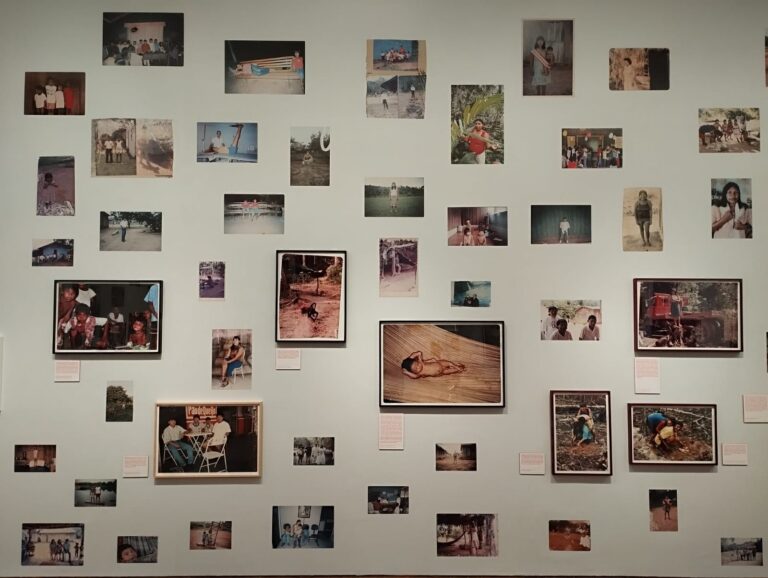
The Lakapoy Collective emerged in 2022 and brought the community together to organise the photographic material produced by the various cameras left in the territory since the 1970s. Photographs were developed, digitised, new material was produced and, after the exhibition ends at the IMS in early November 2025, it will travel to the Sete de Setembro Indigenous Land, where it was entirely produced and where it truly belongs.
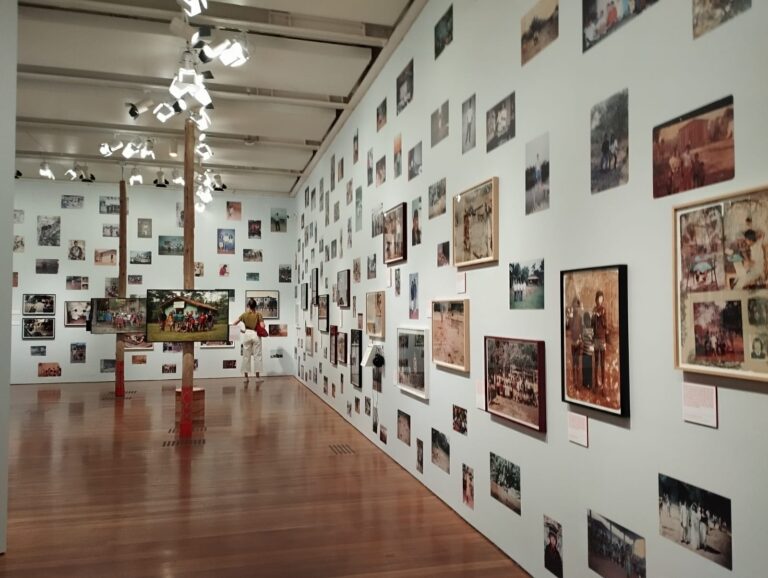
Curated by Txai Suruí, Lahayda Mamani Poma and Thyago Nogueira, with supervision by Almir Narayamoga Suruí and photographs by Ubiratan Gamalodtaba Suruí, Oyexiener Suruí, Gabriel Uchida, Christyann Ritse, Kennedy Suruí, Txai Suruí, Oyago Suruí, Samily Suruí and Oyorekoe Luciano Suruí, the exhibition immediately reinforces the collective character of the photographs. Viewed in isolation, they may seem strange in an exhibition of “photographic art”, as they depict aspects of everyday Paiter life: birthday parties, children playing, sports, black-and-white photographs coloured with paint, blurred images, and so on. But it is precisely in their totality that the photographs gain strength and transcend a mere photographic art exhibition.
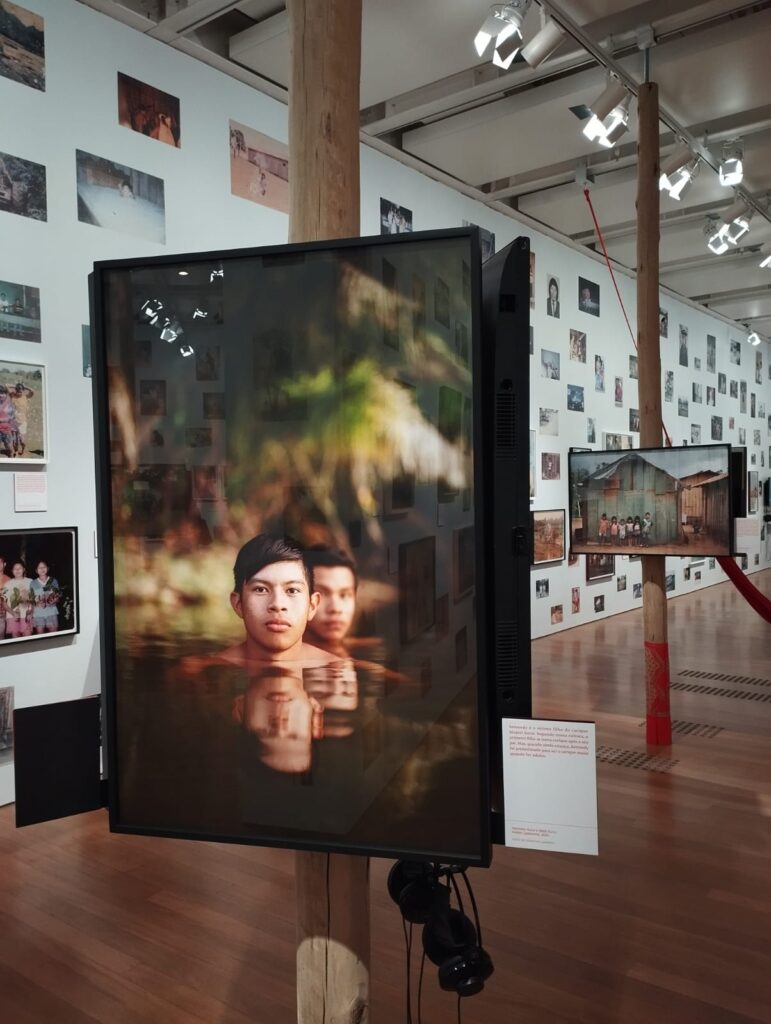
According to Ubiratan Gamalodtaba Suruí, this exhibition is only the beginning of a larger project to map the photographic collections of the approximately 40 villages of the Sete de Setembro Indigenous Land, home to more than 2,000 people nowadays. “We want to involve everyone, because it’s a way of retelling our history.” In a broader context, the photographer states that “in these new times, photography is a form of resistance for the Indigenous peoples of Brazil.”
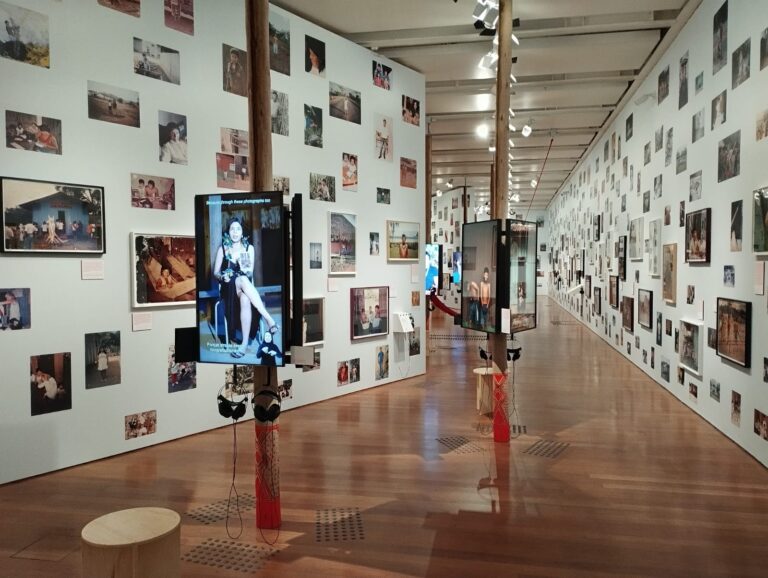
Intentionally or not, the exhibition raises awareness of the role of photography in the collective struggle for life and for Nature, against ethnocides and ecocides. By opening their photo albums, the Paiter Suruí invite us to praxis — reflection and action for a plural and environmentally just world. Paiter, which means “true people”, in the words of the curators, “thinks collectively and represents all forms of life”, and is like a samaúma tree, because its “roots are in the ground of the ancestors” and its “branches reach the world”. By reaching the world through photography, they teach us that, like any tool, it can be used for any purpose. The “true people” have chosen to use it as an instrument of dialogue and self-determination over their territory and, consequently, over the Amazon forests, biodiversity and the global climate.